



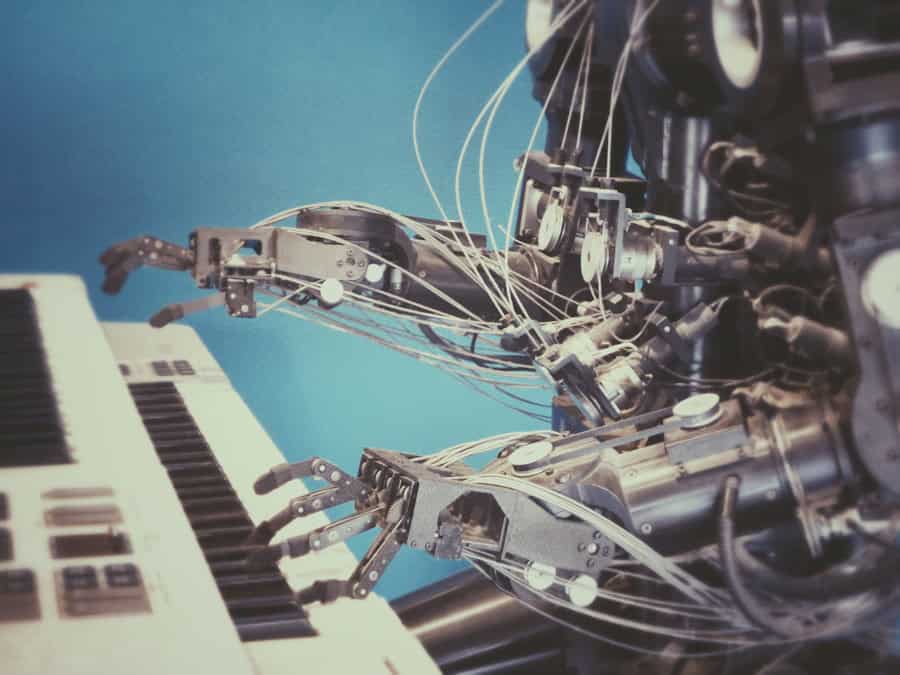
Artificial Intelligence (AI) is becoming an increasingly important part of the filmmaking world these days. From screenwriting to special effects, AI tools and technologies are changing the traditional filmmaking process. First, AI helps screenwriters and creative teams generate new ideas and improve existing scripts. Artificial intelligence can analyze huge databases, recognize popular topics and trends, which allows developers to create unique and interesting stories. In addition, AI can help directors plan the filming process, optimize the shooting schedule, and even help make decisions about framing or lighting.
However, the use of artificial intelligence also poses certain challenges. Developers must find a balance between the possibilities provided by AI and maintaining their own creative uniqueness. While AI can make some processes faster and easier, it is important to retain human creativity and vision. Developers must learn how to effectively collaborate with AI tools so that they become an enabler of creativity rather than a limiting force.
Overall, the impact of artificial intelligence on the filmmaking process is undeniable. Although there are still many challenges to overcome, AI technologies are opening up new opportunities and can help create even more interesting, efficient and high-quality films.
The essential questions of this article
- The impact of artificial intelligence on the filmmaking process
- Interaction between creativity and artificial intelligence
- The use of artificial intelligence in the creation of special effects
- The impact of artificial intelligence on acting and character development
- The use of artificial intelligence in film editing and post-production
Interaction between creativity and artificial intelligence
When it comes to creativity and artificial intelligence, the question is often whether AI can be considered a creative tool or whether it can replace human creative work. On the one hand, AI can help developers generate new ideas, analyze data and discover unusual solutions. Artificial intelligence can perform certain tasks faster and more efficiently than a human, such as creating visual effects or optimizing the filming process.
But on the other hand, it is doubtful whether AI can completely replace human creativity. The creative process is very personal and requires unique human experiences, emotions and intuition. While AI can help creators, it cannot completely replace human creative work. Developers must learn how to effectively collaborate with AI in order to take advantage of it without losing their creative freedom and uniqueness.
Thus, the interplay between creativity and artificial intelligence is complex and requires a constant dialogue between creators and technology. It is important to find a balance where AI becomes a tool for creativity rather than a limiting force. This is the only way to use all the possibilities offered by artificial intelligence without losing human creativity.
The use of artificial intelligence in the creation of special effects
One of the areas where artificial intelligence is especially evident in the filmmaking process is the creation of special effects. AI technologies make it possible to create increasingly realistic and impressive visual effects that would previously have been impossible or required a huge investment of time and resources.
Artificial intelligence can be used at various stages of creating special effects. For example, AI algorithms can help generate realistic 3D scenes, create complex physics models or optimize lighting. In addition, AI can be used to animate characters, create complex movements or even simulate a human face. All of this allows creators to create ever more impressive and believable special effects that enrich movie narratives.
However, using artificial intelligence in special effects comes with some challenges. It's important to ensure that AI-created effects match the creators' vision and don't deviate from the film's aesthetics. Issues related to the authenticity and intellectual property rights of AI-created effects also need to be addressed. Despite these challenges, the use of artificial intelligence in the creation of special effects opens up new possibilities and allows the creation of even more impressive and believable movie images.
The impact of artificial intelligence on acting and character development
Artificial intelligence is also influencing acting and character development in the film industry. One example is the use of AI for dubbing actors and animation. Artificial intelligence can analyze an actor's movements, facial expressions and voice characteristics, and then use this information to create realistic animated versions. This allows for the creation of believable characters, even when real actors cannot participate in the filming process.
In addition, AI can help developers gain a deeper understanding of characters' personalities and emotions. AI algorithms can analyze huge databases related to human behavior, emotions and psychology. This allows developers to create more compelling and deeply developed characters that better reflect the human experience.
However, the use of artificial intelligence in acting and character development also raises certain ethical questions. It is important to ensure that AI-created characters are not used unethically or without the consent of the actor. Issues related to intellectual property rights and the authenticity of AI-created characters also need to be addressed. Despite these challenges, the use of artificial intelligence in this field opens up new opportunities to create more believable and interesting movie characters.
The use of artificial intelligence in film editing and post-production
| ata/Metric | 2010 | 2015 | 2020 |
|---|---|---|---|
| AI in Film Production | Minimal | Some use in VFX | Widespread use in VFX and CGI |
| AI in Scriptwriting | Not significant | Some experimental use | Assisting in generating scripts |
| AI in Audience Analysis | Basic demographics | Advanced analytics | Personalized recommendations |
| AI in Film Curation | Manual selection | Algorithmic recommendations | AI-driven content curation |
Artificial intelligence also has a significant impact on film editing and post-production processes. AI algorithms can help editors optimize the work of editing films, for example by automatically identifying the best places in the frame, suggesting editing options or even performing certain editing steps.
In addition, artificial intelligence can also be used in the post-production stage, such as creating visual effects, improving image and sound quality, or even performing color corrections. AI algorithms can perform these tasks faster and more efficiently than a human, allowing developers to focus on creative work.
However, when using artificial intelligence in film editing and post-production, it is important to ensure that the solutions created by AI meet the vision of the creators and do not lose the human creative element. Questions arise regarding the authenticity and intellectual property rights of AI-created montages. Despite these challenges, the use of artificial intelligence in this field can help increase the efficiency and quality of film editing and post-production.
The impact of artificial intelligence on the evolution of film genres and narratives

Artificial intelligence is not only changing the filmmaking process, but also influencing the evolution of film genres and narratives themselves. AI technologies can help creators generate new ideas, discover unusual plots and create innovative movie genres.
For example, AI can analyze huge databases related to popular movie plots, themes and genres. Based on this information, AI can offer creators unusual narrative options or even generate entirely new genres that meet the expectations of modern audiences. This can help filmmakers create unique and interesting productions that break out of the usual templates.
However, when using AI to create film genres and narratives, it is important to retain the human creative element. AI can help generate ideas, but the final solution and creative vision must rest with the creators. Issues related to the authenticity and intellectual property rights of AI-generated narratives also need to be addressed. Despite these challenges, the influence of artificial intelligence on the evolution of film genres and narratives opens up new opportunities to create more and more interesting and innovative films.
The impact of artificial intelligence on film accessibility and distribution
Artificial intelligence also affects the availability and distribution of films. One example is the use of AI in film localization and subtitling. Artificial intelligence can automatically perform translations, generate subtitles and even synchronize them with the image. This makes it possible to increase the accessibility of films in different languages and cultures, enabling audiences from all over the world to enjoy film narratives.
In addition, artificial intelligence can also be used in film distribution processes. AI algorithms can analyze audience behavior, preferences and needs, and then suggest more efficient ways to distribute movies. This can help filmmakers and distributors reach wider audiences and increase the popularity of their films.
However, when using AI for film accessibility and distribution, it is important to ensure that AI-powered solutions are consistent with the creative vision and do not violate copyright. Issues related to the quality and authenticity of AI-generated translations and subtitles also need to be addressed. Despite these challenges, the use of artificial intelligence in this field can help increase the accessibility and popularity of films worldwide.
Ethical and legal aspects of artificial intelligence in the film industry
The use of artificial intelligence in the filmmaking process also raises certain ethical and legal issues that need to be addressed. One of the main ethical issues concerns the authenticity and intellectual property rights of AI-created works.
For example, if an AI creates a script, character or special effect, who owns the rights to this work? Does it belong to developers, AI developers, or even AI itself? These issues are highly debated and require clear legal regulations.
Another ethical issue concerns the use of AI for dubbing actors or even character creation. It is important to ensure that this process is carried out ethically and with the actor's consent, without violating their rights.
In addition, the use of artificial intelligence in the filmmaking process also raises questions of responsibility and ethics. For example, can artificial intelligence create an original and interesting film that meets the expectations of the audience? Can it be guaranteed that the algorithm will not infringe copyright or use their work without permission? It is also important to consider how this technological tool can affect the job market for filmmakers and whether it can replace traditional creative processes. Therefore, it is important to carefully evaluate the use of artificial intelligence in the filmmaking process and ensure that ethical principles and legislation are followed.
FAQs
What is artificial intelligence?
Artificial intelligence (AI) is a branch of computer science that includes machine learning, language processing, understanding, planning, and problem solving.
How is artificial intelligence used in the world of cinema?
Artificial intelligence is used in the world of cinema in many ways, including the development of movie recommendation systems, the generation of special effects, the writing of scripts and even the optimization of film production processes.
What are the future prospects for the use of artificial intelligence in the film industry?
The future prospects for the use of artificial intelligence in the film industry are very broad. AI can be used to create ever-new and innovative special effects, optimize filmmaking processes to save time and resources, and even create entirely new movie scripts.
What are the challenges of using artificial intelligence in the film industry?
One of the challenges for the use of artificial intelligence in the film industry is the need for developers and technology specialists who can build and maintain the operation of AI systems. It is also important to ensure that artificial intelligence is used ethically and responsibly so that privacy or security rules are not violated.